Encapsulating three distinct yet intertwined stories, Jim Jarmusch’s latest feature, Father Mother Sister Brother, is a quietly meditative piece on the inherent disconnect and loss within families. In the first two installations, a pair of siblings arrange seeing one of their parents together after a lengthy hiatus, while the film’s final installment involves what’s to become of siblings and the notion of family after the passing of their parents. With sparse dialogue between the characters, existential questions of whether we truly know our parents (or can ever truly know them) manifest and linger. Following nearly a decade after the release of Paterson, Jarmusch continues his trend of reserved yet poignant films with plenty of relational nuances and details left to contemplate.
Each portion of the film begins with a reconnection between siblings driving to a predetermined destination. Planning to visit their distanced and eccentric father, Jeff and Emily (Adam Driver and Mayim Bialik, respectively,) have differing thoughts regarding their father in terms of how much contact or avoidance was had throughout the last several years. With subtleties scattered throughout their conversations, we learn that Jeff leans in more towards selflessness, as shown in his elaborate spread of pantry items and financial help for what he believes are expensive home repairs for his father. After catching a glimpse of a new Rolex watch on his father’s wrist during their visit, we can’t help but wonder how much of their father’s life is but a deceptive fabrication to his children.
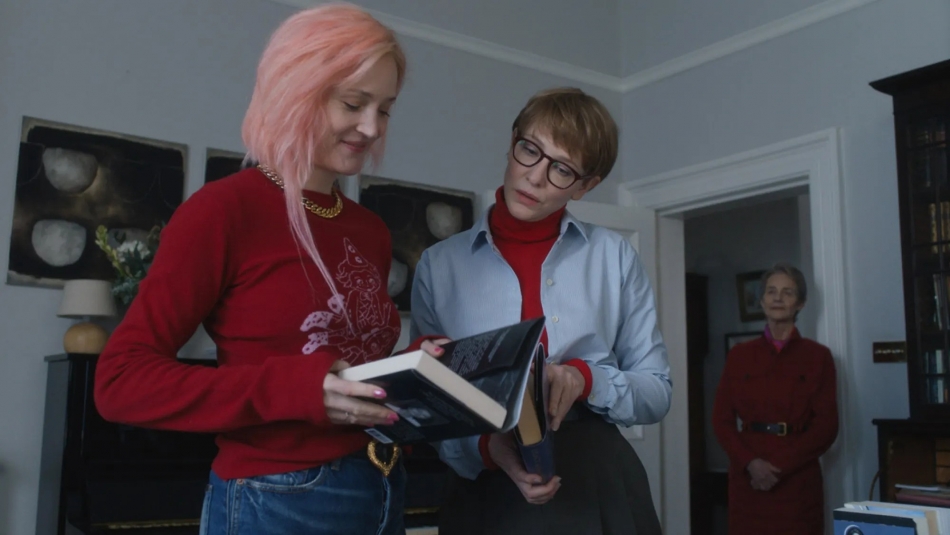
In the second installment, we’re introduced to two sisters who visit their mother on an annual basis in Dublin for afternoon tea. Wild child Lilith (Vicky Krieps) doesn’t have much to show in the way of a plan for her future, but that doesn’t stop her from putting on a front to impress her stoic mother (played by Charlotte Rampling). On the other hand, Timothea (Cate Blanchett) is ever poised and respectful in her conversations and actions under her mother’s roof, wishing to keep the peace between all three. The slow passage of time especially feels palpable as Lilth waits for her Uber driver (paid for under her mother’s account), listing off the minute countdown until her car’s arrival. The realization that each child hasn’t visited their respective parent in the last year yet so little is spoken and shared in the time that they do share in person speaks volumes.
In the final story, twins Skye (Indya Moore) and Billy (Luka Sabbat) share a greater physical affection and emotional warmth for each other. Mourning the loss of their parents after a small aircraft crash, the two pay one last visit to their old apartment, delving through their parents’ old photographs, multiple ID cards and a fake marriage license (unbeknownst to them). Though each fractured story differs from the rest, Jarmusch discreetly unfolds the deceptions and white lies that weave their way throughout families, yet underlying these anecdotes are wishes of acceptance despite the disconnect. Perhaps it’s futile to attempt to fully understand another individual, Jarmusch quips. Yet recognizing that loss is inevitable, why neglect to seek and strive for that closeness in the finite time that this life allows? Father Mother Sister Brother doesn’t boast nor brag, but lingers with its delicate touch on life’s quiet contemplations.
FATHER MOTHER SISTER BROTHER is screening at Austin Film Society today through Thursday, January 22nd. You can purchase tickets for a screening here.