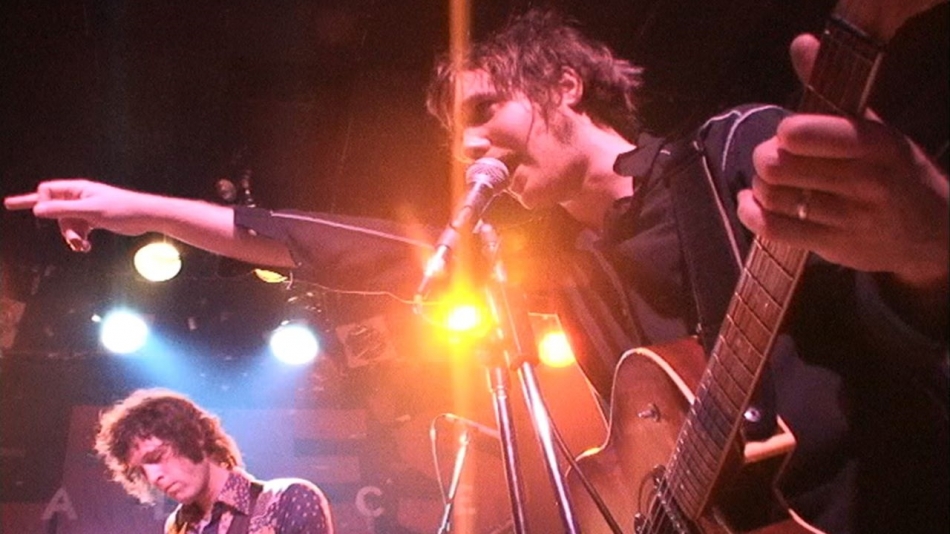
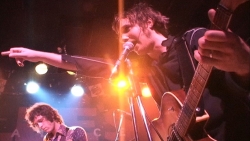
Going to school in Canada in the mid-aughts (albeit on the opposite side of the country from Toronto), Broken Social Scene was a pivotal and defining band in the music scene amongst friends. Highlighted as a musical collective of close friends, It’s All Gonna Break was initially pitched to be released sometime shortly after 2007 when director and close friend Stephen Chung gathered a vast archive of video material. The members of Broken Social Scene originally turned down the idea, with It’s All Gonna Break taking just shy of two decades to finally take shape for a wider audience. Pushing against a straight-forward narrative, Chung’s music documentary takes years and years of footage, from Broken Social Scene starting off as a duo project to featuring more than dozens of members onstage at any one time, portraying the indie music scene in Toronto and the myriad relationships and intimate ties members of Broken Social Scene had with each other.
Coming from a cinematographer background, Stephen Chung had been collecting footage since the 90’s of his musician friends, including Brendan Canning, Charles Spearin, Kevin Drew, Justin Peroff and Andrew Whiteman. Gathering varying influences from house and post-rock genres, the immediate counter-culture and upcoming indie-rock acts from the scene (including Peaches), the amateur performers formed a small, independent community, practicing at all hours of the night in friends’ basements. Described as an “endless hanging out”, practices were plentiful, feasible and practical due to cheap rent and the city’s art scene coming into fruition. Songs are frequently described as ‘happy accidents’, their early live gigs sounding extremely raw and improvised.
As the band gained underground recognition, the talent pool widened to include vocals from Leslie Feist, Emily Haines and Amy Millan (all involved in their own projects, namely Feist, Metric and Stars), with Kevin Drew creating his imprint Arts & Crafts to self-release Broken Social Scene’s breakthrough album, ‘You Forgot It In People’ in late 2002. Renowned as being influential tastemakers, Pitchfork’s 9.2 out of 10 review for the album projected the band on a wider global scale in terms of fandom. Playing Coachella and Lollapalooza in 2006 (their set adjacent to headliners’ Red Hot Chili Peppers), the band got offers to tour internationally and perform on late night talk shows. Despite their burgeoning success, the band was initially founded on chaos; rotating members, multiple players onstage, and musicians frequently entering and exiting the band to start their own projects or life ventures, eventually making touring more of a burden than an enticement.
Throughout the film, Chung’s fly on the wall perspective allows for plenty of experimental and visual material, often presented in a kaleidoscopic multitude of frames and juxtaposed with recent interviews and previous live performances. Unfortunately this approach starts to lose steam as sessions in recording studios, live shows and meandering conversations opt to stay a bit past their welcome, in turn becoming a bit of a forced project that relies on surface-level storytelling. Footage at the end of the documentary veers into the personal for Chung, yet might potentially cause the uninitiated to waver with their interest. It’s All Gonna Break certainly celebrates the closeness of musical and communal unity, but unfortunately might not be what it takes to garner significant interest for an hour and a half documentary.