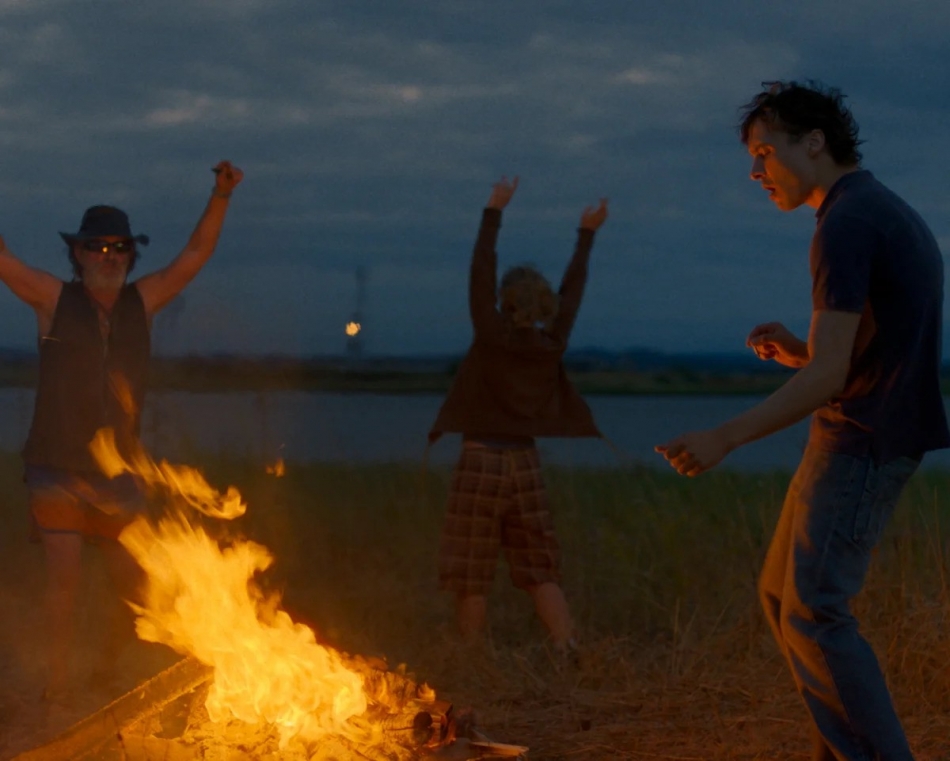
The realities of adjusting to society after time served in prison can be hopeful and promising, yet more often than not offer a magnitude of setbacks and discouragement. In Harris Dickinson’s debut directorial feature, Urchin depicts Mike (played by Frank Dillane), a twenty-something year old who has been raised on the streets over the last five years. When he’s released from prison after eight months due to an assault he committed, he’s determined to get his life in order. Obtaining resources from a counselor, securing a job as a chef in a restaurant/hotel and forging new friendships, Mike’s perseverance is reassuring. Nevertheless, with life’s ups comes frustrations and societal barriers, challenging even the most willful of individual drives. Dickson’s film navigates the hurdles that come with addiction in a masterfully nuanced manner, not looking for easy solutions and answers when it comes to one’s choices to forge their life’s path.
Not knowing the full extent of Mike’s background, we do know that he never finished school, has been homeless for a number of years, and seems lukewarm at best when asked about his ties to his family. His ‘close’ friend, Nathan (played by Harris Dickson himself), has betrayed his trust by stealing his money and a public fight ensues. Mike’s unnerving behavior promptly shows itself in an attack on a goodwilled stranger offering to buy food for him, stealing his watch and belongings and leaving him unconscious on the street in return. When Mike is released from behind bars, it’s difficult to trust which way his new role as a chef and budding friendships will go. Listening to meditation tapes in his hostel room coupled with positive self-talk, Mike seems to have turned a corner. Instead of resulting in black and white scenarios with his first attempt at a night out in a karaoke bar and working shifts in a stress-fueled kitchen, Dickinson’s film allows for subtle actions and reactions of tension to reveal themselves.
In an intimate encounter where he has the chance to apologize to his victim post assault, it’s clear that Mike is still wallowing in a sort of emotional immaturity, physically and physiologically uncomfortable in his one-to-one talk. Other scenes of lashing out in anger and frustration at his boss and his attempt at a romantic relationship with a partner show the scope of his unskillful means of navigating adulthood. Dickinson inserts surreal scenes and visions of a haunting older woman and an earthly cave, especially during Mike’s more challenging moments, perhaps suggesting an internal retreat from the misfortunes and challenges he’s faced, or an attempt to drown his sorrows into something more peaceful. Urchin thankfully doesn’t point fingers at any one thing specifically and reveals layers of Mike’s history and future unraveling, making the film a very promising and steadfast debut for Dickinson.